Milan Tresch Stories
News about us
It was worth working today.
A message that reminds us why we do what we do.
Dear Csaba,
Thank you for your connection request, your message, and the invitation to talk.
I had some time to go through parts of your website and read a few materials.
When I saw DVTK mentioned, I was instantly taken back to my childhood. I could almost hear it and feel it in my stomach – the roar of the stands as we cheered, sitting or standing: Go DVTK!
It nearly brought tears to my eyes.
I find what you are working on truly interesting, and I would be glad to get to know it better.
Best regards,
Eszter
Van, amikor egy történet átlépi a határokat. És egyszer csak a helyére kerül.
Az elmúlt napokban a „Lila hajgumi” fejezet olyan amerikai WNBA-szurkolói közösségekben jelent meg, ahol a mindennapokban a liga játékosai és történetei futnak.
Ugyanazon a felületen, ugyanabban a térben.
Egy miskolci történet, egy másik korszakból.
Talán az a legfontosabb visszajelzés, hogy ami itt született, az ott is értelmezhető. Ami itt szerethető, ott is azzá válhat.
A pálya ugyanaz maradt, a lányok élményei és történetei is.
Csabi és Milán


Ezt az üzenetet ma kaptuk egy olvasónktól.
Köszönjük Klószné Papp Máriának ezeket a gondolatokat.
A könyv borítójára kattintva tudjátok megynitni.
2026.03.10
.jpg)
Kedves Csaba és Milan!
Örömmel tudatom hogy megjelent a Levél Kedvesemnek idei első száma, benne a könyvajánlóval.Mellékelem a linket, a lapot elektronikus változatba és a könyvajánlóról egy képet.Tudom,hogy nagyon fogják szeretni az olvasóink.
Köszönöm az együttműködést az egész szerkesztőség nevében és sok csodát kívánok a mindennapokra.:)
Hamarosan jövök a másik könyv recenziójával.
Üdvözlettel:
Mónika Napholcz
2026.03.07
 Edo and Mesi |  Winter Ilona (Icus) – Olimpikon márványtábla előtt | 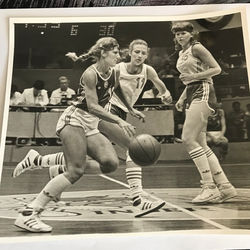 Icus akció közben |
|---|---|---|
 Közös csapatkép; Edó az álló sorban balról a negyedik, Icus jobb szélen guggol, első a sorban. |
The International Campaign of Edo and Mesi Has Begun
In recent weeks, we have launched an intensive outreach campaign within the U.S. women’s basketball subculture with our book
Edó and Mesi – Two Women, One Iron Curtain. One Unbreakable Bond.
Our goal is to introduce the story of two Hungarian women who grew up and competed behind the Iron Curtain to communities where basketball is not only a sport, but identity, culture, and lived history.
The first responses have been encouraging.
We have received openness and professional interest from American sports journalists – including Lyndsey D’Arcangelo, known for her work focusing on human-centered stories in women’s basketball.
A major milestone of this campaign is that Ilona Winter (Icus), Olympian, former DVTK and Hungarian National Team player, has officially accepted the role of international ambassador of Edó and Mesi.
Ilona Winter represented Hungary at the 1980 Moscow Olympic Games and remains one of the defining figures of Hungarian women’s basketball. She is still active today as a member of the Hungarian senior national team, embodying both athletic excellence and generational continuity.
Edó and Mesi is not simply a sports book.
It is a story of friendship, resilience, loss, and the inner strength of women’s sport in a divided Europe.
The journey that began behind the Iron Curtain is now crossing the ocean.

Bejelentettük a projektünk második szakaszának beindítását. Elindult a Tresch Navigáció Fórumot!
A honlap és a Facebook csoport felületeit átalakítottuk.
2026.02.15

Mérnöki nyomozások – hogyan születik egy nagy hatású szakmai könyv
Az elmúlt időszakban több szakmai platform is felkért bennünket arra, hogy osszuk meg:
hogyan készül egy olyan könyv, amely egyszerre marad szakmailag pontos és mégis olvasmányos.
A Mérnöki nyomozások kapcsán arról írtunk, miként fordítható le a szigorú műszaki nyelv közérthető, narratív formába anélkül, hogy a szakmai tartalom sérülne.
A teljes írás a Biztonság Online felületén jelent meg – a linket alább közöljük.

A cikk a képre kattintva olvasható

Golden Seal on Edo’s Book – Professional and Personal Reflections
We have received particularly meaningful feedback on Edó’s book in recent days.
On the one hand, Erzsébet Weninger, editor and owner of Montázsmagazin, shared thoughtful professional reflections on the volume. On the other hand, Ilona Winter, Edó’s former teammate at DVTK and a living legend of women’s basketball, posted her personal impressions as a reader.
Together, these two responses represent a true golden seal for us: professionally credible and, on a human level, deeply meaningful.
Én csak egy olvasója, nem kritikusa vagyok ennek a könyvnek, de szeretnék hozzászólni, megosztani néhány gondolatot. Csak most jutottam el oda, hogy végre kezembe vegyem a könyvet, és elolvassam! Ennek több oka is volt, …azt gondoltam nem tudom elolvasni sírás nélkül!! Ez így is történt, egy nagy csomag papírzsebkendő “landolt a kukában!! De…sokat is nevettem!! Ha tudom, hogy néhány óra alatt ilyen élményben lesz részem a könyv elolvasása után, “biz.isten!” sokkal hamarabb kézbe veszem!! Edó és Emese bizonyos értelemben közel álltak hozzám, hiszen egykor egy csapatban játszottunk , csapattársak voltunk a DVTK-ban, a 80-as éveket hozta vissza számomra is . Nagyon jó volt emlékezni, nosztalgiázni a régi szép időkre, a vasgyári “munkára”, a teltházas Sportcsarnok lelátóin tomboló, szurkoló tömegre, a csapattal való közös utazásokra, és egyáltalán a fiatalságunkra!! Csuda jó volt megtudni Edó és Emese kibontakozó, és hosszan tartó örök barátságát!! Bár néha elsodorta egymástól Őket a sors, időnként más utakon jártak, mégis közös volt az életútjuk, tetteik, vágyaik!! Fantasztikus élmény volt a könyv olvasása, gratulálok Csabi és Milán, ez méltó megemlékezés Edóról, aki ma is köztünk van! Emesének, és mindenkinek, aki valamilyen formában segítette a könyv megírását, emlékezéssel, vagy történettel, hozzászólással, köszönet!! Mindenkinek csak ajánlani tudom, hogy vegye kézbe, olvassa, nem tudja majd letenni!! Olvasás induljon!!!

The promotion of Engineering Investigations has gained momentum within the professional community. This has also led to a rise in sales. We are now receiving requests for book presentations. It was a major effort - and it paid off.

News – A Brief Overview of Our Community Presence
At the beginning of January, we created our Milan Tresch Stories (MTS) Facebook group. Our goal was simple: to establish an open yet protected space where our texts can exist side by side, without noise or distraction.
Since the launch of the group, we have been posting two texts daily. These include essays, short story excerpts, reflective pieces, as well as chapters from Edó’s book, Two Girls on a Bench.
Today, the group has 170 members who not only read the texts but often respond to them as well—sharing feedback, asking questions, debating, and thinking along with us.
We consider Erzsébet Weninger’s response to one of our essays especially important. Erzsébet is the founder and owner of Montázs Magazine, and for more than a decade she has been working to ensure that literature has space, relevance, and a future. We value her opinion not only as a reader, but also as a professional voice in the literary field.
“I agree with everything; I myself believe strongly in the power of humor. It makes life and its difficulties easier to bear. I have never encountered such a deep exploration of humor before—this was truly impressive for me. Especially because it helped me recognize certain people in my own environment. The lack of a sense of humor can be toxic in human relationships and can destroy them. A humorless person cannot be changed. But what can we do if we are in a relationship with such a person? Either we let them go, avoid them, or—if that is not possible—we must endure them.”
Previously, Montázs Magazine also published an author interview with Milán, which was another important professional confirmation for us.
We are present on several platforms, but at the moment the focus of our community activity is centered around the book Two Girls on a Bench. So far, the responses to the book have been deeply personal, moving, and without exception positive—not formulaic reviews, but genuine reactions rooted in personal engagement. These reader reflections are also available in our Facebook group.
Overall, it can be said that our community presence has not only begun, but is alive and functioning. Not as a campaign, not noisily, but consistently and on a human scale. This is an important milestone for us—and one we feel we have reached successfully.

“We are truly honored to share that the refined Montázs Magazine has published an interview featuring Milán. Through this conversation, you can get to know us—and his work—more closely.
Click on the Montázs Magazine image to read the full interview with Milán.”

“Today, on January 6, 2026, we successfully submitted the required legal deposit copies to the National Széchényi Library. From this day on, Two Girls on a Bench and Engineering Investigations officially form part of Hungary’s universal cultural heritage.”

Review by Döniz Telekesi
Két lány egy padban (Edo and Mesi) is a deeply human, emotionally powerful novel that takes the reader back to Hungary in the 1970s and 1980s, to the city of Miskolc. Through a sensitive and honest narrative, the book follows a woman’s life from childhood to adulthood while offering a vivid and authentic portrait of the era.
One of the novel’s strongest themes is the enduring power of friendship. The bond between Edó and Mesi is a rare, lifelong connection that provides strength and stability through joy, hardship, and loss.
Edó is a particularly memorable character: a talented basketball player for DVTK who later starts a new life abroad with her family. The story takes a heartbreaking turn when she is forced to face a terminal illness. With great empathy and respect, the novel also explores the grief of those left behind, her husband and child.
Két lány egy padban is a painfully beautiful yet uplifting story about the fragility of life, the sustaining force of friendship, and a love that continues even after loss.
10/10 🌟


Christmas Eve. They arrived.
At the very last moment, our Two Girls on a Bench books arrived.
With the help of our friend Robi Lukács, they made it down to Miskolc, and our customers were already able to hold their copies in their hands.
Some took three books at once.
Some meant them as gifts.
Some for themselves, quietly.
Tonight is about giving.
And for us, these books now mean that they have arrived where they truly belong. We even received photos.
Thank you for your trust.
We wish everyone a blessed, peaceful Christmas Eve.


Engineering Investigations Has Been Published
Last night at midnight, we received the printed copies of Engineering Investigations.
Today, on December 20, 2025, we presented the volume to our partners at the Kempinski Hotel Corvinus.
This publication holds special significance for us, as the author, Prof. Dr. László Dezső Kováts, was able to receive his book before Christmas.
The book was published under an external commission, jointly produced by MTS and IRINDIUM Kft.

Idézet a könyvet záró köszönetnyílvánításból
Szeretném kifejezni hálámat mindazoknak, akik hozzájárultak e könyv elkészítéséhez és megjelenéséhez.
Elsősorban Tresch Csabának és Tresch Milánnak mondok köszönetet, akik odaadó, gondos munkájukkal formálták és szerkesztették a művet.
Külön köszönettel tartozom Dr. Bérczi László tábornok úrnak a szakértői ajánlásért.
Hálás vagyok továbbá mindazoknak a kollégáknak, akik átolvasták és véleményükkel segítették a könyv végső formáját: Szabó Attila gépészmérnöknek, a Medirlab Kft. projektigazgatójának; Dr. Fülöp Ferenc egyetemi adjunktusnak; Sárközy Tamás igazságügyi műszaki szakértőnek; valamint Rácz Zoltán építészmérnöknek.
Köszönöm mindazoknak a cégeknek is, amelyek hozzájárultak a könyv kiadásához, különös tekintettel a Generali Biztosító Zrt-nek.
Kováts László Dezső
műszaki igazgató
IRINDIUM Méréstechnikai Kft.

Today, on December 19, 2025, we received an honorable invitation from Férfihang Magazine to submit essays every two weeks, which they will publish. We are very happy to accept this distinguished invitation.
Our very first essay has already been published, and you can read it here:


“The first 10 copies are ready! They’ll be given as gifts to selected partners at Tamás and his team’s company dinner. Hooray!!!
2025.12.18”


We’ve reached the final approval stage of our new professional volume, Engineering Investigations.
Today, Tamás and I closed the last remaining details: sponsor placements, the foreword and afterword, the image materials, and the structural components.
From here, the manuscript moves on to professional editing and layout, and then to the printing house.
This book is a 40-chapter professional work based on real cases from the world of fire investigation and technical expertise - and it represents an important reference for us.
MTS is not solely dedicated to literary projects.
As a publisher, we also take on works that carry real professional value, practical experience, and broader societal benefit.
Today, this phase of the work was completed.
The photos capture the final moments of our closing review.


“It was a great honor for us to take part in the year-end award ceremony of the Magyarság KicsiNagykövete program in 2025.”
